Be Responsible
Be Prepared
Be Respectful
Events & Announcements
Check out our Go Green page! Click here
Upcoming Events
WELCOME LETTERS
School Year Calendar
SCHOOL HOURS
Building Open for Staff |
7:30 AM |
Open for Students |
7:50 AM |
| Tardy - Middle School | 8:00 AM |
| Tardy - Elementary School | 8:35 AM |
| Building Closed | 4:30 PM |
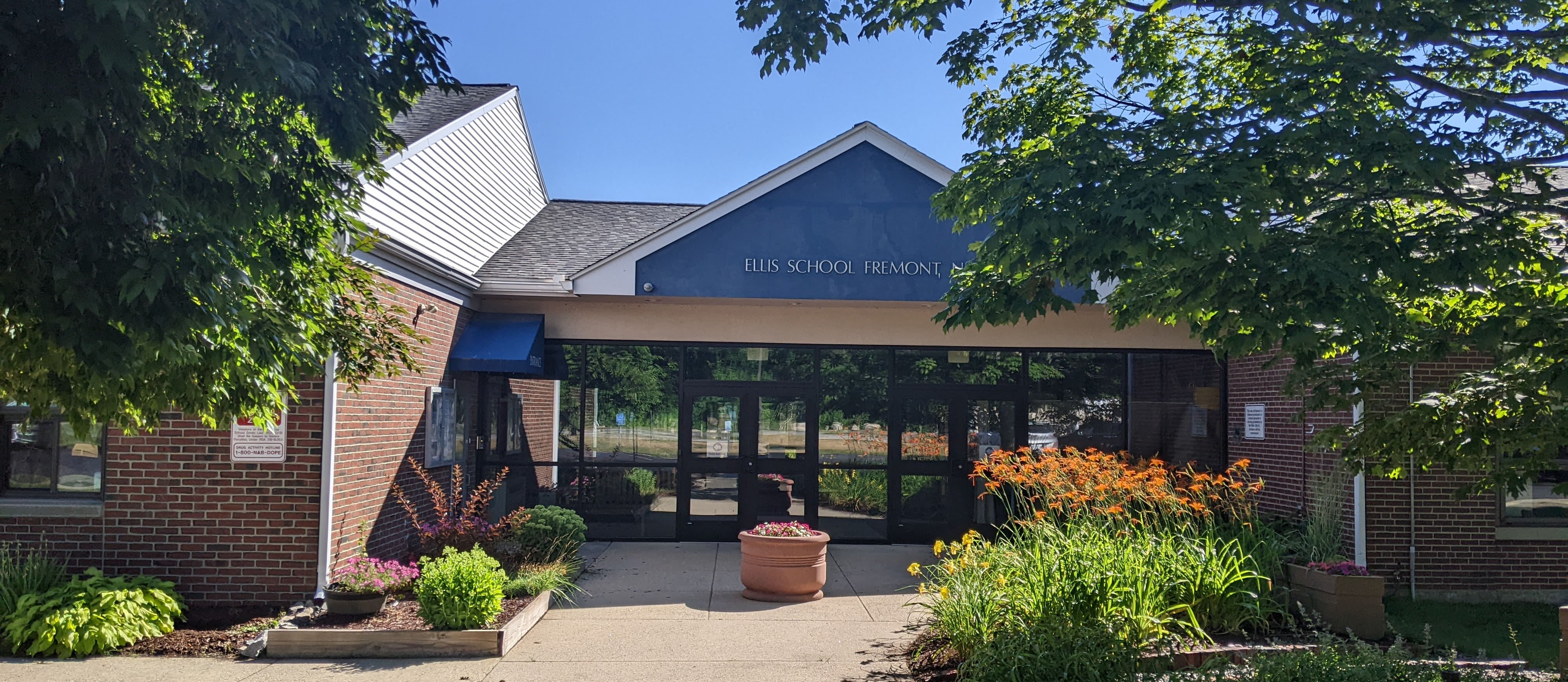
Welcome to Ellis School 
Important Information Regarding H1N1 Influenza
Dear Parents & Guardians;
As we have a few known isolated cases of H1N1 Influenza in the school community, we are sending the information below which we have received from the Department of Health & Human Services and the Department of Education.
End-of-School-Year Update for Parents Regarding H1N1 Influenza Virus
Since the new H1N1 influenza virus began to circulate in New Hampshire in early May, the NH Department of Health and Human Services and the NH Department of Education have been working closely together and updating schools about this virus. The World Health Organization has indicated we are at the start of a 2009 influenza pandemic. This declaration is an indicator of how widespread the transmission of this virus is, not its severity: http://www.who.int/csr/disease/swineflu/en/
At this point, we know that:
- Seasonal influenza is commonly seen in schools and daycares every year, but most illnesses occur in the cooler months.
- This year we have a new strain of influenza circulating called H1N1 and it has been shown to disproportionately affect school-aged children and young adults.
- H1N1 influenza causes illness very much like regular seasonal influenza. People who are ill with H1N1 influenza can get fever, chills, cough, sore throat, headache, muscle aches, fatigue, and sometimes nausea, vomiting, or diarrhea.
- Most people infected with this new virus have recovered without the need for medical care.
- High risk groups like very young children, pregnant women, the elderly, individuals with underlying medical conditions such as asthma, chronic lung and heart conditions, cancer and diabetes etc should consult with a health care provider if they have signs of influenza.
- H1N1 influenza is circulating in NH communities now. Cases have occurred across NH in most counties and most cases are not related to travel outside of the state. Therefore, it is important to take measures to control the spread of infections whether or not a case of H1N1 influenza is identified in your community.
- NH DHHS does not recommend that districts notify all parents each time there is a case, because at this time, one can assume that it is possible to be exposed to H1N1 influenza at school, work, or anywhere else in the community.
- The best way to stop the spread of H1N1 is good hygiene. Teach your kids, and follow these steps yourself:
- Wash your hands frequently (15-20 seconds with soap and warm water) or use 60% alcohol-based hand sanitizing gels
- Always cover your nose and mouth with a tissue when you cough or sneeze or cough into your elbow/shoulder and always throw away used tissues into a trashcan
- If you have not washed your hands, avoid touching your eyes, nose or mouth
- Do not share drinking/eating containers or utensils
- Avoid contact with ill persons if possible
- Monitor your own health
- Stay home if you are ill. Do not return to work, school, or social activities until you have been asymptomatic for 24 hours
The NH DHHS is working with the NH Department of Education to prepare schools and daycares for the fall influenza season. Public Health Experts are concerned that H1N1 could become more severe in the fall. Our school district continues to stay informed and is well prepared to respond. Nationally, steps are being taken to create a vaccine for possible use in the fall. Our district will continue to take extra measures to ensure commonly touched surfaces are disinfected. We will also continue to have strict exclusion policies for students and staff with flu-like illnesses. In the fall, we will do our part to promote influenza vaccinations for all students and staff.
Over the summer, please continue to stay informed about this new strain of influenza. For more information, please go to: http://www.cdc.gov/h1n1flu/ or http://www.dhhs.state.nh.us/DHHS/DHHS_SITE/swineflu.htm
For more information, please contact the NH Department of Health and Human Services, Division of Public Health Services, Communicable Disease Control Section at 603-271-4496, or in NH, 1-800-852-3345 ext 4496.
Sincerely,
Maura Milner, RN, NCSN, Med Jennifer Farnese, RN, BSN
School Nurse School Nurse
Parent Reminder!
June 17, 2009
Dear Parents and Guardians,
We are sending out a reminder regarding school procedure for absences due to illness. Parents must always state the nature of their child’s illness when the student is being called in sick.
Kindly let us know what symptoms your child is experiencing, include fever, cough, sore throat, headache, vomiting, etc. No student or employee should return to school until all symptoms are gone, and they must be fever free for 24 hours. Fever-free means that should a student or employee have a fever of 100.1? or greater at 2:00 pm on Tuesday, then they may not return to school until the following day after 2:00 pm, and be fever free and without other symptoms. If a student is seen by a physician for illness, the student must return to school with a note from the physician stating the nature of their illness and that it is okay for the student to return to school once they are 24-hours fever free.
This procedure needs to be followed, as parents and staff need to be considerate of other staff and students in the school community in order to prevent the spread of any illness. Please feel free to call the nurse at 603-895-2511 and dial 8 with any questions or concerns, should your child be ill.
Thank you,
Maura M Milner, RN, MEd., NCSN
William Marston
Interim Middle School Principal
Dawn Lewis
Elementary School Principal
Change in Date!!
The school Board meeting schedued for June 9 has been cancelled.
School Board Meeting
A meeting of the Fremont School Board is scheduled for Tuesday, June 23, 2009 at 6:30 PM. The meeting will be held at SAU #83, Blackrocks Village, Unit 1, Fremont, NH 03044.
Fremont School District
ANNOUNCEMENT
The Fremont School Board is pleased to announce the selection of John Safina as Middle School Principal at Ellis School effective July 1, 2009. He replaces Interim Principal, William Marston, who has served with distinction since July 1, 2008.
John Safina was selected among a group of 22 applicants for the position. A thorough interview process was conducted by a technical committee, a community committee, and the School Board. Mr. Safina has a Bachelor of Arts degree from Boston College, Master of Arts from Emerson College and Certificate of Advanced Graduate Studies in educational leadership from University of Southern Maine.
Mr. Safina has 13 years experience as an educator in the middle school setting and seven years as an Assistant Principal in the Rochester School District. Mr. Safina has been active in the New England League of Middle Schools as a participant and presenter. His staff recently nominated him for New Hampshire Assistant Principal of the Year and he was selected as a finalist.
Before the end of the school year, an open house will take place which will give the community an opportunity to meet Mr. Safina.
Attention Parents!!
May 15, 2009
Dear Parents:
This letter will give you updated information about the new flu called H1N1 identified in the United States and how that might affect us at Ellis School.
Every year, some people get sick with the “seasonal” flu during the fall and winter months. However, there is a new strain of influenza called H1N1 that is making people sick with the same symptoms as the seasonal flu: fever, chills, sore throat, cough, headache and body aches (sometimes nausea, vomiting and diarrhea). There is still a lot we do not know about this new flu virus.
It is important that you stay well informed about what is happening. While officials are learning more about this new flu virus, they know it is contagious and it spreads from person to person much like seasonal flu. In New Hampshire, those people who have had the new flu have been mildly ill and are recovering well. Still, as with seasonal flu, there are some people who may be at higher risk for complications including those people 65 years and older, children younger than five years old, pregnant women and people of any age with chronic medical conditions. School closure is not advised at this point for a suspected or confirmed case of novel influenza A (H1N1) and, as with seasonal influenza, generally is not advised unless there is a magnitude of faculty or student absenteeism that interferes with the school’s ability to function.
The best advice is to use healthy habits to prevent getting ill and to contact your healthcare provider as you usually would if someone in your family is ill. Some actions you can take for you and your family are provided below. Accurate and updated information about this outbreak can be found on the CDC webpage, including information about cases in NH: http://www.cdc.gov/h1n1flu/ . The CDC also has dedicated pages to parents and caregivers that you may find helpful: http://www.cdc.gov/h1n1flu/parents/. In addition, NH DHHS site continues to post valuable information including a Frequently Asked Questions fact sheet for NH Schools and Childcare programs: http://www.dhhs.state.nh.us/DHHS/DHHS_SITE/swineflu.htm .
Actions you can take —
- If you or your child is sick, stay home from work or school until you are better. Keep sick people away from people who are not sick.
- Tell your school nurse or administrator about your child’s symptoms so they can watch for other students with the same symptoms.
- Wash your hands well and often. Make sure your children do the same. Wash with soap and water for at least 20 seconds.
- If you can’t wash with soap and water, use a hand sanitizer. (Gels, rubs or hand wipes with at least 60% alcohol)
- Remind children to keep their hands away from their face – don’t touch mouth, nose, or eyes.
- Cover your cough. Teach your children to do the same. Cough into the inside of your elbow, or into a tissue — not your hands!
- Throw away used tissues or hand sanitizer wipes. Teach your children to throw away tissues and then wash hands.
- Don’t share water bottles, utensils, cups, food, etc. with others.
- If people in your home are sick with the flu and cannot see a healthcare provider, care for them at home — Give plenty of liquids (clear fluids with electrolytes). If you are unsure what over-the-counter medications can be safely used to reduce symptoms, if the ill person is having difficulty breathing, or if they are getting worse, call a healthcare provider.
- You can disinfect hard surfaces in your home with a solution made of one ounce bleach to one gallon of water.
If you have questions, call your school nurse or healthcare provider. If any of our students or members of your family living in the same household are ill with influenza like symptoms, we would appreciate you contacting us so we can provide assistance. You can call the school information line (INSERT TEL #). You can also go to the school website (INSERT URL).
Fremont School District, SAU 83
H1N1 (Swine Flu) Influenza Response Plan
The Fremont School District is working collaboratively with state and local health agencies to provide employees, parents, guardians, students and the community with the latest information regarding the H1N1 (swine) influenza. Ellis School will remain open at this time. This response plan is developed in part based on the most recent direction and guidance from these agencies. Please call the school at 895-2511 and speak to the nurse or administration with any questions.
Updated Recommendations to Decrease Influenza AH1N1
in New Hampshire Schools 5/4/09 8:30pm
· |
Maintain general health and hygiene activities in your school. Remind all students and staff of the importance of regular hand-washing and use of alcohol hand gels, no sharing of drinking containers, and coughing/sneezing into the elbow. |
|
· |
Each morning, all parents/caregivers should assess all family members and especially all school-age children for symptoms of influenza (fever and cough or sore throat cough) or other symptoms that might be influenza. |
|
· |
Each morning all school faculty and staff should assess themselves for symptoms of influenza. |
|
· |
All students, staff or faculty with influenza-like illness (fever and cough or sore throat) should stay home and not attend school. Students should stay home for 24 hours after major symptoms have resolved (fever, rhinorrhea). |
|
· |
All students, staff and faculty with probable or confirmed H1N1 influenza should stay out of school for at least 7 days even if their symptoms resolve sooner. Students and faculty who are still sick at 7 days should continue to stay home from school until at least 24 hours after they have completely recovered. |
|
· |
As always, situations can be individualized and school authorities may close school at their discretion. Parents may use their judgment regarding the risk and benefits of sending their children to school during this influenza outbreak as they would during a seasonal influenza outbreak. |
|
· |
Schools will not be routinely ordered closed by DPHS on the basis of a diagnosis of suspected or confirmed cases of influenza A H1N1. As is our practice with seasonal influenza, schools may be closed if larger numbers of students or faculty become ill and school functioning becomes disrupted. |
|
· |
We do not recommend canceling any events or closing any schools at this time. We recommend consulting with NH DHHS Communicable Disease Section before considering any actions outside of your standard protocols and outside the scope of this guidance. |
|
|
|
|
We are still in the early stages of this outbreak and the situation may change. DPHS will continue to monitor information both locally and nationally and continually assess whether changes are needed in these or other A H1N1 influenza disease control measures. Please refer to the CDC website for daily updates on the outbreak and publication of interim guidance at: http://www.cdc.gov/swineflu/
|
Facts About Swine Flu (H1N1 flu)
Did you know?
- Swine flu (H1N1 flu) is a respiratory disease caused by type A influenza viruses.
- The Swine flu spreads the same way the regular flu spreads.
- People with the flu pass it to others by coughing and sneezing.
- Swine flu can cause fever, runny nose, being tired, sore throat, and coughing.
- Swine flu is not spread by eating pork. This flu has not been found in pigs in the United States.
- Most of the time the Swine flu sickens people for a short time period. But like the regular flu, some people have gotten very sick and a small number have died from Swine flu. There are medicines that can treat Swine flu.
How can you stay healthy and keep from getting the Swine flu?
- Wash your hands often with soap and water.
- Avoid close contact with sick people.
- Try not to touch things that may have the flu virus on them.
- Stay home when you are not feeling well.
- After sneezing, wash your hands or use a hand sanitizer with 60% alcohol.
- Sneeze into a tissue, your sleeve, or your elbow. Do not cover your mouth with your hands.
- 1-888-330-6764 public inquiry line available from 8am-8pm
Frequently Asked Questions
Answers to Frequently Asked Questions For Parents about Schools and Child Care Programs and the H1N1 Flu From the New Hampshire Department of Education (NHDOE) and the New Hampshire Department of Health and Human Services (NHDHHS) We are providing answers to frequently asked questions for parents about school and childcare and the current H1N1 influenza (Swine Flu). A public inquiry line is also available 8:00 AM- 8:00PM for questions at 1-888-330-6764.
How will I know if schools and child care programs should/will be closed?
School and child care closure decisions will be made on a case-by-case basis in consultation with state and local public health and education officials. In considering whether to recommend closure, public health officials will consider whether there is a confirmed or probable case; the severity of the virus; whether the patient was infectious when at the school or child care facility; and whether closure will decrease the spread of illness in the community. Frequent communication will take place with affected schools. School closures will be announced just as they are for weather-related closures.
How will we know when schools re-open?
Decisions to re-open schools will be made on a case-by-case basis in consultation with state and local public health and education officials. Schools will announce plans to re-open just as they make announcements for weather-related closures.
What are the symptoms of H1N1 influenza?
The symptoms of H1N1 are the same as for other types of flu and include fever, cough, sore throat, muscle aches, fatigue and sometimes vomiting and diarrhea.
When should I keep my child home from school or childcare?
If your child has flu-like symptoms, consult your health care provider. If your child has influenza you should keep them at home for 7 days or until 24 hours after symptoms are gone. A public inquiry line is also available 8:00 AM-8:00PM for questions at 1-888-330-6764.
What are the H1N1 influenza infection prevention measures I can take to protect my children and family?
Many good materials can be found at the CDC website www.cdc.gov/h1n1flu . We have also attached a good prevention handout.
How worried should I be about the H1N1 virus?
To date, the cases of H1N1 influenza in the United States have been mild, with most patients recovering well and not experiencing symptoms any more severe than the regular flu. Health and public officials are monitoring this strain of influenza so closely because it is a new virus and we need to be alert in case it becomes more severe. Page 1 of 2 5/3/2009 5:59 PM
What should I do if schools and/or childcare programs are closed?
If schools or child care programs close you may want to think about working together with two to three other families to supervise and provide care. Studies suggest that child care groups with fewer than five children typically have fewer respiratory infections.
What if my child goes to a residential school and they or other students are sick with influenza symptoms?
Residential schools are being advised to voluntarily isolate students either at home, in the infirmary, or another setting separate from non-affected students. These recommendations are subject to change as additional information about the H1N1 virus becomes available. Page 2 of 2 5/3/2009 5:59 PM
Find out what's happening at Ellis School!
Attention parents!
Afternoon bus schedules have changed! Please click here to see if you child's bus will be affected!
COMMUNITY MEMBERS
IMPORTANT NEWS REGARDING THE FUTURE OF FREMONT SCHOOL DISTRICT!
This is a critical time in the Fremont School District as together we develop a Strategic Plan which will serve as a benchmark for improving the School District and conduct a search for a Middle School Principal for the next school year.
Check out this week's Ellis School Newsletter!
SAU Newsletters:
Parents, did you come to our Math Make and Take Night? Click the link below!
.